
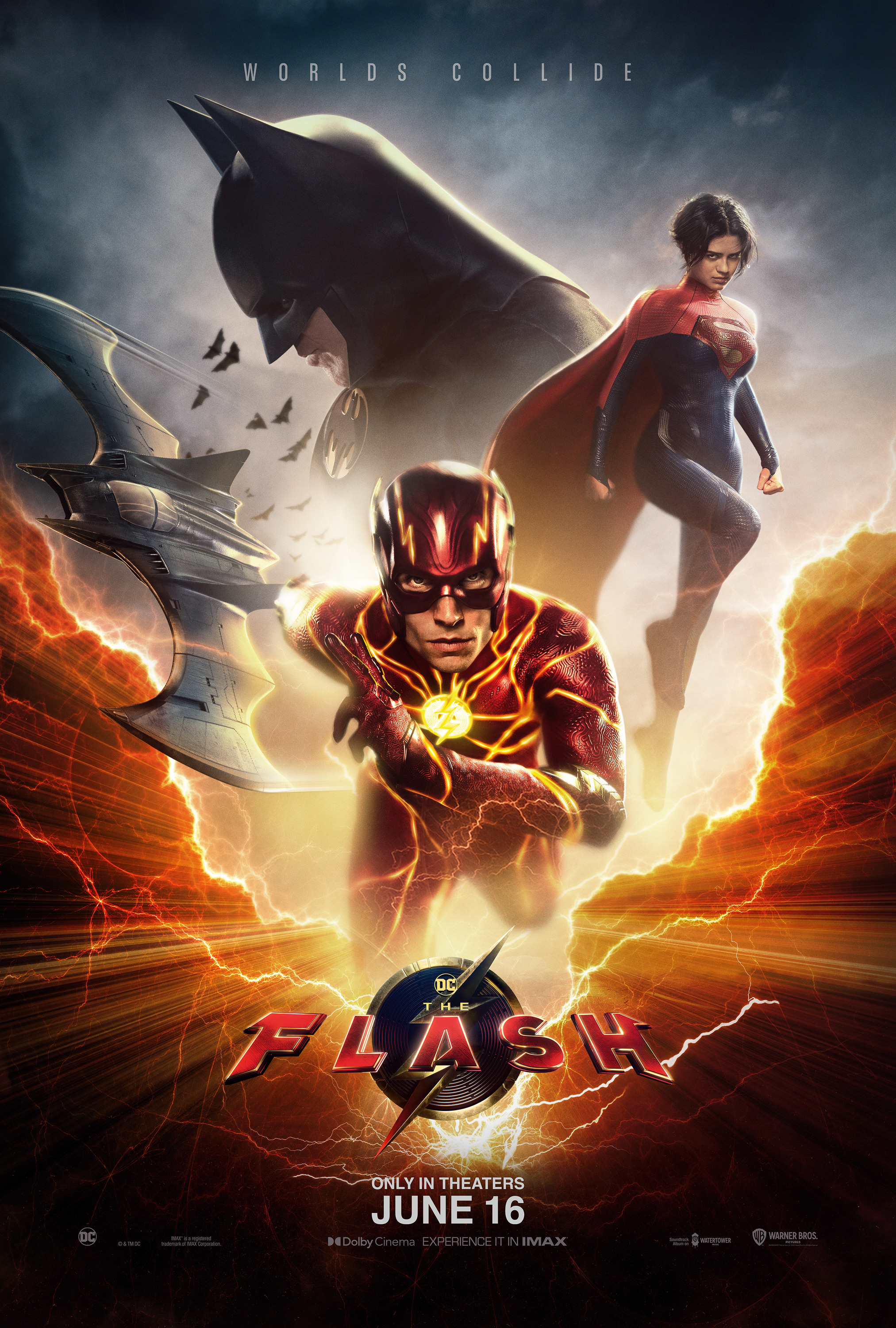
Time: 144 Minutes
Age Rating: M – Violence & offensive language
Cast:
Ezra Miller as Barry Allen/The Flash
Sasha Calle as Kara Zor-El/Supergirl
Michael Shannon as General Zod
Ron Livingston as Henry Allen
Maribel Verdú as Nora Allen
Kiersey Clemons as Iris West
Antje Traue as Faora-Ul
Michael Keaton as Bruce Wayne/Batman
Director: Andy Muschietti
Worlds collide when the Flash uses his superpowers to travel back in time to change the events of the past. However, when his attempt to save his family inadvertently alters the future, he becomes trapped in a reality in which General Zod has returned, threatening annihilation. With no other superheroes to turn to, the Flash looks to coax a very different Batman out of retirement and rescue an imprisoned Kryptonian — albeit not the one he’s looking for.
![full_star[1]](https://the-cinema-critic.com/wp-content/uploads/2014/09/full_star1.png)
![Black-Star-Photographic-Agency[1]](https://the-cinema-critic.com/wp-content/uploads/2014/09/black-star-photographic-agency1.png)
Saying that the timeline of The Flash movie was a rollarcoaster would be a massive understatement. It’s been in the works for nearly a decade, cycling through multiple different writers and directors. Even when they production began there were tons of setbacks and issues, whether it be with the reshoots, alterations due to regime changes at Warner Bros and DC, and even controversies (to put it mildly) involving its lead star Ezra Miller. As the years went on, my anticipation for it greatly lessened, especially when it became clear that it would serve as a reset to the DCEU. It was clear that WB had a lot riding on it with the way it was promoted, known stars like Tom Cruise and Stephen King highly praised it, and there were declarations about it being ‘the best DC movie since The Dark Knight’. I had doubts after seeing the unimpressive trailers and especially the leaked footage of the movie. Still, I decided to watch the movie and if it’s any consolation to WB, The Flash is mostly functional and isn’t nearly the disaster it could’ve been considering the behind the scenes issues. But on a quality level, it is probably closer to Shazam 2 than The Dark Knight.
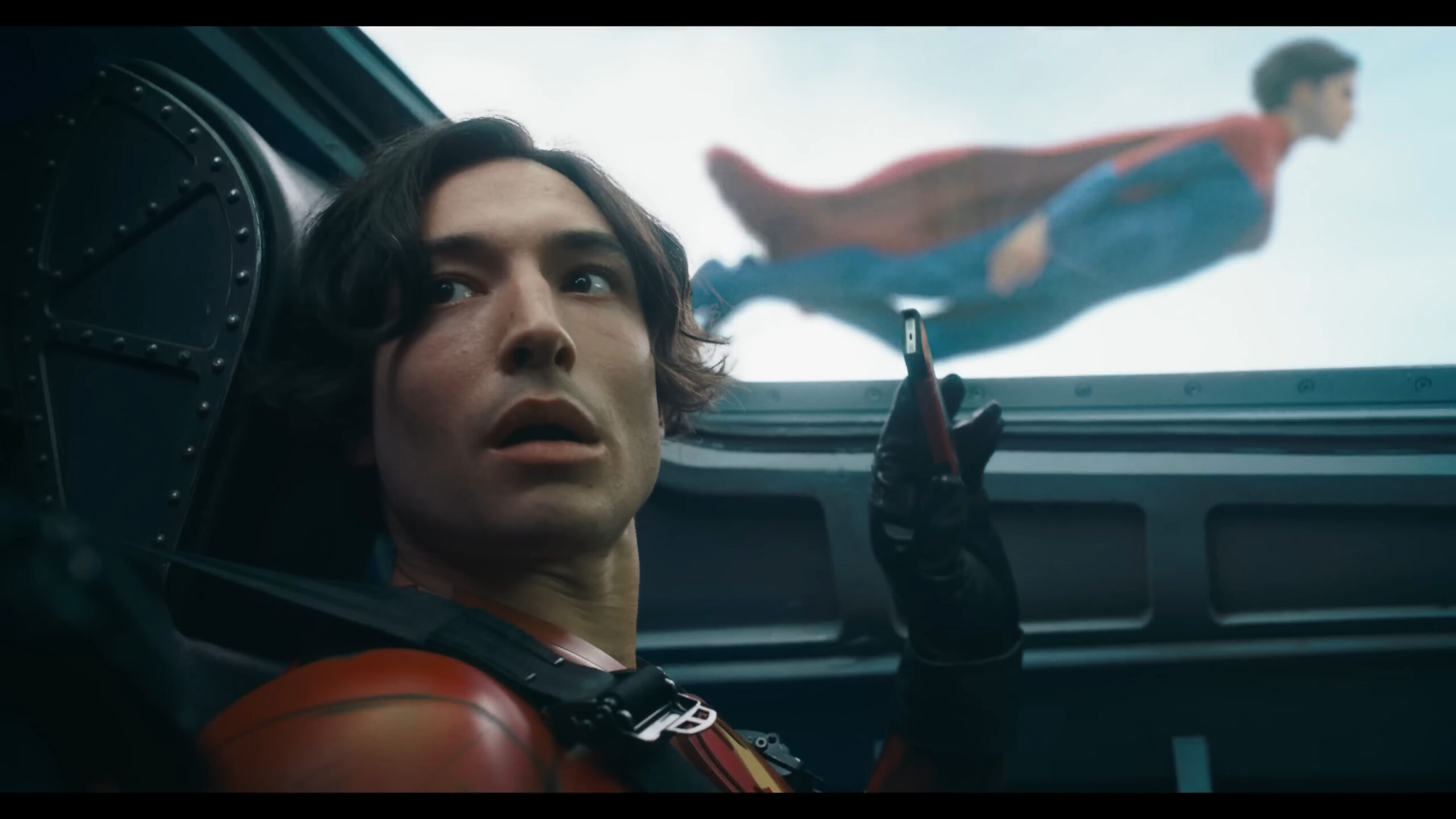
The first half is generally okay, if very flawed. The opening action sequence is questionable with some weird choices, but after that I was on board with the plot for a surprisingly long time as it gets into the main driving force of the film. Barry Allen/The Flash’s mother was killed and his father was framed for her murder. In the present day, Barry goes back in time to save his mother, leading to great consequences and changes in the timeline. This aspect is the only genuine part in the whole movie, so it’s a shame that not enough time is given to it despite the importance to the story. It’s quite underdeveloped, and I noticed more problems the more I thought about it. You can certainly argue that the movie is still about Barry’s story and revolves around him. However, it is still overshadowed by the multiverse stuff, which the film is more interested in. For those familiar with DC Flash lore or the tv series in the 2010s, you can probably tell that this movie is somewhat based on the Flashpoint comic story where Barry goes back in time to save his mother. That comes with its own issues from that original story, including the way that Barry’s decision caused random things in the past to change, including the members of the Justice League. At the same time, it isn’t really a full on Flashpoint adaptation, as many of the key aspects seen in the comic aren’t here. The way the movie tries to portray the consequences of changing the past is underdeveloped and poorly done, and the conclusion is especially disappointing. The whole plot is like that, badly thought out and making less sense the more I thought about it. For a 2 hours and 30 minute long movie which felt overstuffed, not much of substance really happened in that runtime. There is a lot of bad humour which is grating the vast majority of the time. There’s even a joke during the opening action scene which is lifted straight from Justice League (2017), in fact much of the comedy in The Flash feels in the same vein as that movie and that’s not a good sign.

For the first two thirds the movie chugs along as it gets into Batman nostalgia, introduces Supergirl, and occasionally remembers that little important story about The Flash. The third act is where everything falls apart, it’s funny how you can exactly pinpoint the exact moment it does, as it rushes towards a visually ugly climax. The situation that the characters find themselves in and the way it plays out is just so contrived that it is pushing credibility even by superhero standards. The Flash movie blatantly relies on nostalgia, with the most notable of appearances relegated to Michael Keaton’s Batman, Supergirl, and General Zod from Man of Steel; I have issues with how those were handled and will elaborate on them later. But I’m going to now touch upon a particular sequence in the third act which contains a ton of cameos. It showcases horrific CGI recreations of past DC characters (non DCEU) in another desperate play for nostalgia. Most vile of all is the fact that most of these are of long dead actors. I knew of this scene beforehand, and that did improve my viewing experience. Nonetheless, there was still something depressing watching awful CGI recreations of dead actors mugging for the camera, waiting for audience applause. It’s truly a ghoulish addition and possibly the worst scene in the franchise, one which easily could’ve been removed. Barring one genuinely good emotional scene, the third act is flat out bad. With The Flash being seen as somewhat the ending of the DCEU, you’d think they would attempt to give some sort of satisfying conclusion or lead the way for the reboot. Instead, they end on a gag which will never be resolved. If this is really the official end of the DCEU, then it’s got to be one of the strangest and most baffling conclusions to a major franchise, down to the final lines and shots. There is an end credits scene, but its really not worth sticking around for.
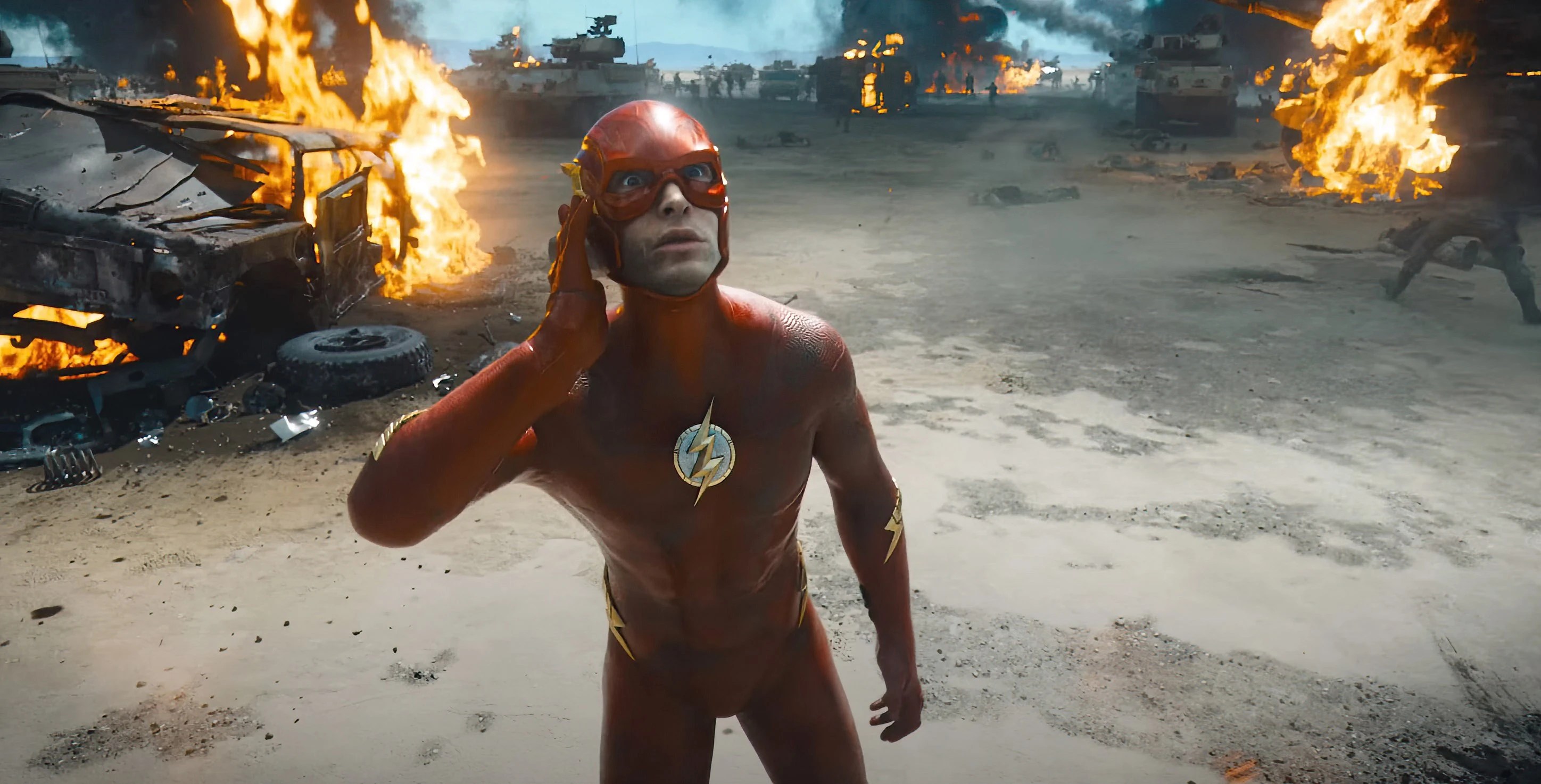
Ezra Miller returns as Barry Allen/The Flash and while I’m aware that not everyone likes their version of the character, I liked their performance. Much like Justice League (2017), the film unfortunately leans into the character’s goofier aspects to an annoying degree; his social awkwardness is cartoonish and while people could put this down to Miller’s performance, it’s clear that the role was written and directed with this intent. This is further seen in Ezra’s other performance as a younger more insufferable version of Barry. That said, Miller’s emotional scenes are acted very well. Ron Livingston (replacing Billy Crudup) and Maribel Verdu play Barry Allen’s parents and they are good in their screentime. Ben Affleck returns as Batman/Bruce Wayne in a relatively small role to give his final performance as the character before walking away for good. I have very mixed feelings on his portrayal in the opening action set piece, but I liked his last scene.
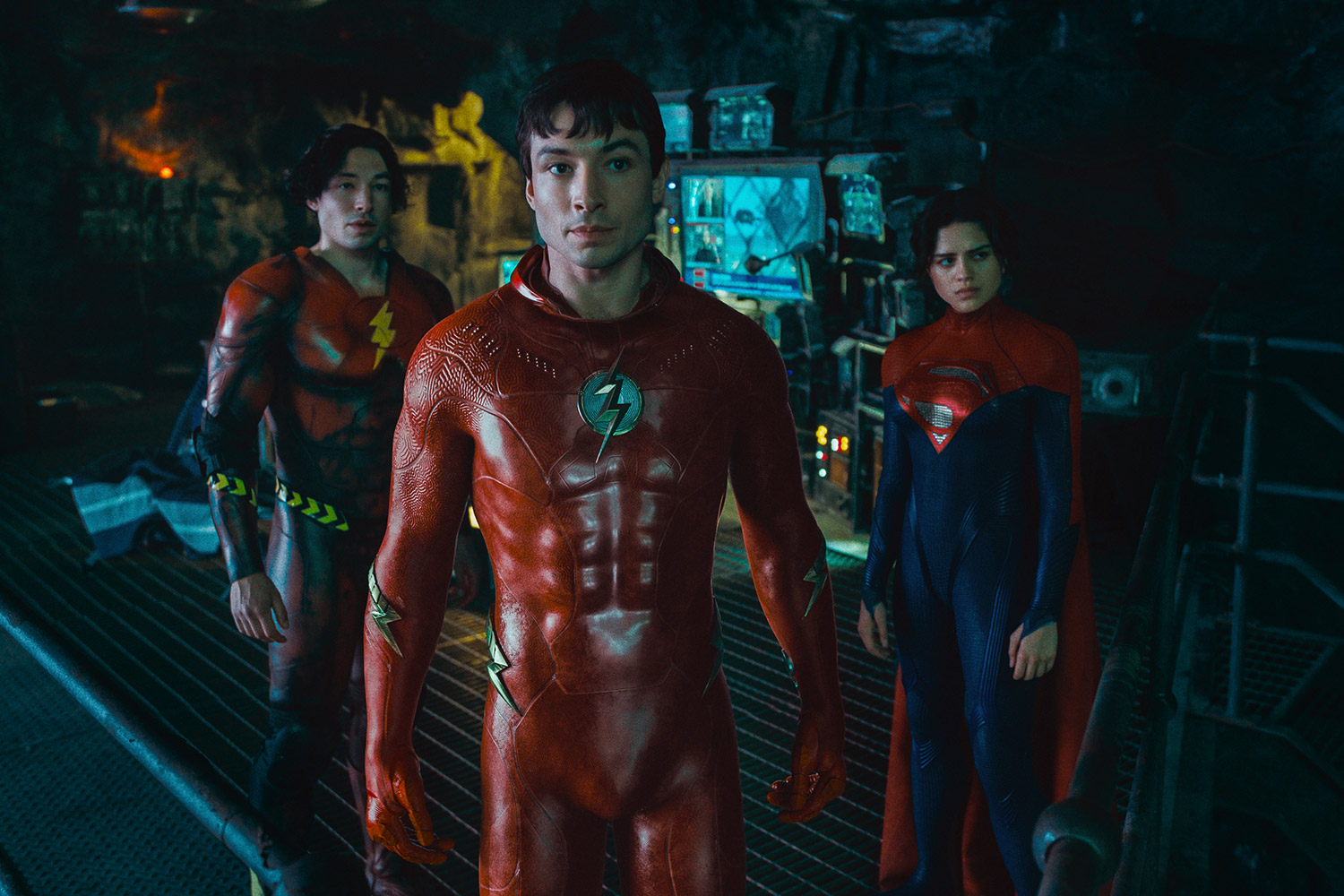
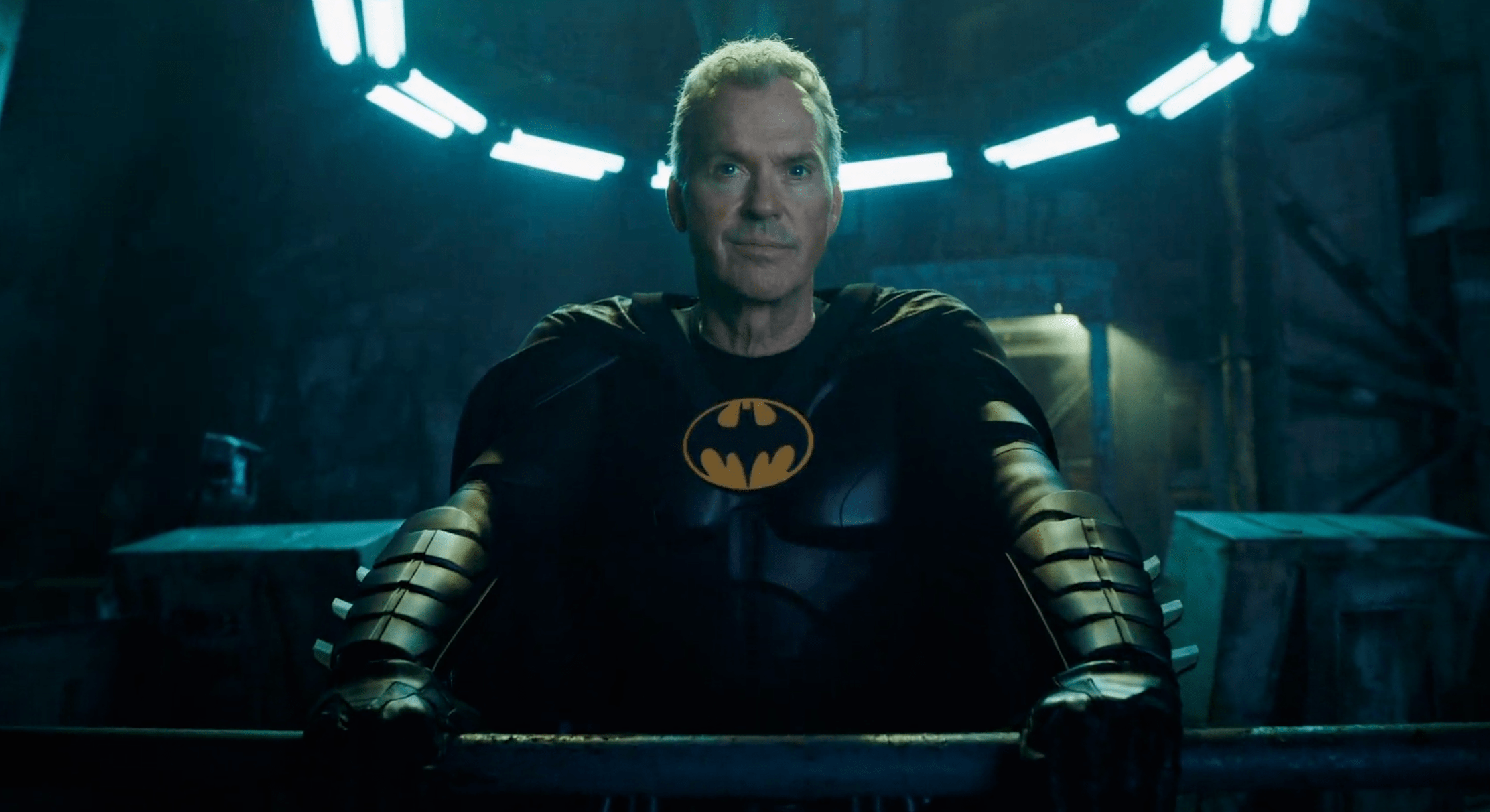
One of the most notable parts of the movie is the fact that Michael Keaton would play Batman again, here playing the Batman of the timeline that Barry finds himself in after making the change. Most of the marketing used Keaton as the film’s biggest selling point, either wanting the nostalgia factor to draw people in, or they didn’t want to focus too much on Ezra Miller for obvious reasons. Keaton really isn’t as committed as he was in the Tim Burton Batman films, so it’s just as well that his character can get away with this. His inclusion in the film is confusing, especially as the Flash didn’t travel to the Burtonverse. Aside from the aesthetic including the Batcave, Batsuit and the score (and of course the actor), Keaton’s Batman here doesn’t resemble the Batman in the Burton films, especially not in personality or backstory. You could easily swap him out with any other Batman actor, and it would’ve been narratively identical. The only thing we learn about this Batman is that he’s retried, he’s basically a variant of Affleck’s Batman who looks different for some reason. Otherwise, he lacks any sort of actual character. The films plays on nostalgia by getting the aesthetic and feel of Keaton’s Batman movies without any of the personality or character. There are many moments of him saying lines from his prior appearances that feel crowbarred in, he comes across more like a talking action figure than an actual character. Not to say that there isn’t any enjoyment to be had with him, but for a movie relying so much on this popular portrayal, his appearance here is shockingly hollow.
I was more interested in Sasha Calle’s Supergirl, since I could tell that they weren’t going to rely on cheap callbacks with her. I liked the setup they did with her character, especially with the alternate Man of Steel timeline. It’s a shame then that she isn’t utilised that well; the writing and character moments for her were limiting and not much is actually done with her. The closest thing to a main villain is Michael Shannon as General Zod. Zod’s invasion of Earth is built up over the course of the whole movie, but he really only makes his direct appearance in the third act. Shannon’s performance in Man of Steel is one of the most memorable and energetic supervillains from the past 10 years, but here he gives an uncharacteristically bored performance. To be fair there isn’t anything for him to do here, just to serve as a physical threat. If you told me Shannon spent an hour delivering lines in front of a camera and then they pasted his face onto a CGI body, I’d believe you.

There were a large number of directors who were attached to this movie, but it was Andy Muschietti who completed it. I liked his work on the IT movies, so there was at least some potential here. One of my favourite parts about the DCEU is that with the exception of Justice League, each film has a distinct style which differentiates them from the other movies in the franchise (especially in stark contrast to the MCU). While Muschietti is a solid director, this is probably the second least inspiring direction I’ve seen within the DCEU, and the best thing I can say is that he delivered a completed film despite the disastrous production. Many of the technical aspects are a mixed bag, from the action set pieces to the visual effects. Some moments look decent, but most of it looks really fake. Superhero movies utilise a lot of CGI, but in The Flash you lose track of the number of times you see characters become blatantly fake looking weightless digital models. There’s an argument made that things look weird because its from the Flash’s perspective, and while I understand that to a degree, that can only go so far. The uncanny looking characters in the time travel scenes are no doubt a deliberate stylistic decision, beyond that there’s no reason for the visual effects to look blatantly unfinished. The third act is where things are at their worst. In no doubt a move to avoid getting the same heat that Man of Steel’s climax received, it takes place in this empty desert and is among the worst looking set pieces I’ve seen in a superhero movie. Some have said that it looks like a video game cutscene, but more accurately it looks like an ad for a DC mobile game. For what its worth, the score from Benjamin Wallfisch is pretty good.

Aside from dabbling in digital necromancy, the most damning part of the movie is the lack of commitment to being anything. It aims for a multiverse story, but really only settles for a few notable changes to the timeline and characters, and isn’t a good Flashpoint adaptation at all. It wants to indulge in nostalgia but in a rather hollow way which serves no purpose, especially with how it brings in a very surface level version of Michael Keaton’s Batman. The ending doesn’t commit to a partial reboot, a full reboot, or an ending for the DCEU. The story’s message is about how you shouldn’t linger on the past and instead move on, rendered meaningless by the film’s own reliance on the past. The biggest thing going for it was its attempt at being a somewhat personal Flash story, but even that didn’t receive enough attention and was overshadowed by everything else. The Flash is the worst kind of crowd pleaser, trying to appeal to every possible group and not succeeding in any way. All the conflicting choices make it the most confounding movie in the DCEU, and they aren’t bold decisions made by visionaries, but mandated and ill advised choices made during a nightmare of a production.

For that reason, I have no idea who I could recommend this movie to. Admittedly, hearing and seeing the worst aspects of the movie beforehand did help my viewing experience. I even liked parts of it, like some of the performances and well handled moments. But on the whole, The Flash is an absolute mess. The end result of the story is mostly hollow and unfocused, the humour is largely unfunny, its use of nostalgia is grating and highly questionable, and it is visually ugly, especially in its subpar final act. What’s frustrating is that there is some genuine potential here. But I consider it to be amongst the worst of the DCEU, not as bad as Justice League (2017), but it still gets worse the more I think about it. If Blue Beetle or Aquaman 2 end up being worse, then that’s a pretty depressing end to the DCEU.
 The Cinema Critic
Leave a comment