

Time: 107 Minutes
Age Rating: M – Horror scenes
Cast:
Klaus Kinski as Count Dracula
Isabelle Adjani as Lucy Harker
Bruno Ganz as Jonathan Harker
Director: Philip Kaufman
![full_star[1]](https://the-cinema-critic.com/wp-content/uploads/2014/09/full_star1.png?w=300)

I knew that Nosferatu the Vampyre was a remake or reimagining of the 20s silent horror film, Nosferatu (an unofficial adaptation of Bram Stoker’s Dracula), and was directed by Werner Herzog. Having finally gotten around to watching that classic movie (and appreciating it on that second viewing), I was curious as to how they would attempt to remake it, especially with how iconic it had become over the decades. Herzog had succeeded in creating a film that stands on the same level as the original.
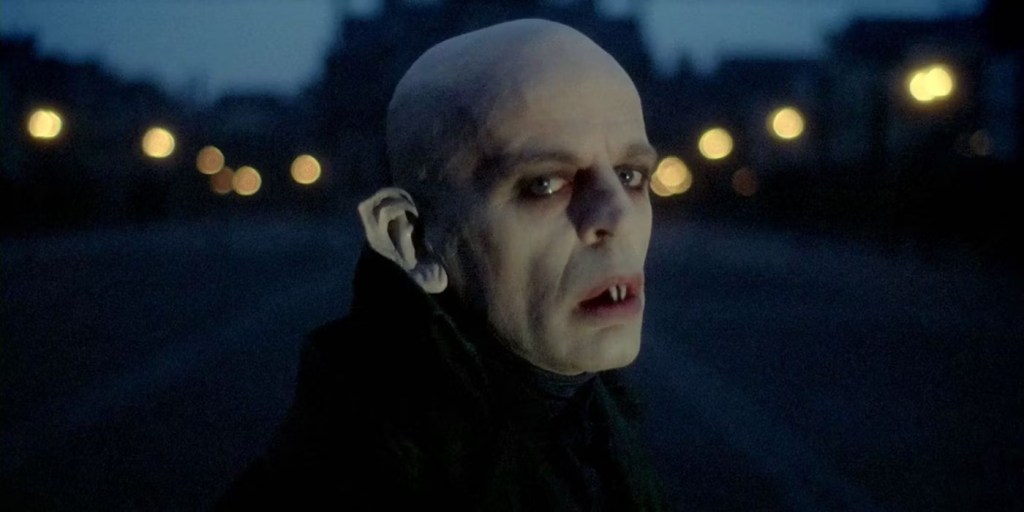
Nosferatu the Vampyre definitely has the title of the 20s film in its own title, but is otherwise another adaptation of Bram Stoker’s Dracula (the main vampire in question is named Dracula instead of Orlok like in the original Nosferatu), which just so happens to take some stylistic inspirations from that original 20s film. As such, Werner Herzog’s film pays homage and respect to the original while being its own movie and adding onto it. It’s a very understated film considering the reputation of Dracula, and is far more contemplative and methodically paced. Most surprising of all was the heavy emphasis on the tragedy of Dracula, and was far more layered than expected.

Nosferatu definitely benefits from the very talented cast. Klaus Kinski’s Count Dracula definitely takes a lot from Max Schreck’s performance of Count Orlok in the first movie, but is nonetheless excellent, radiating such an unsettling energy even when he’s still and not doing anything. Kinski and Herzog also add a level of tragedy to the Count, and he’s portrayed as more than just an embodiment of evil. Isabelle Adjani and Bruno Ganz are also really great in their parts.
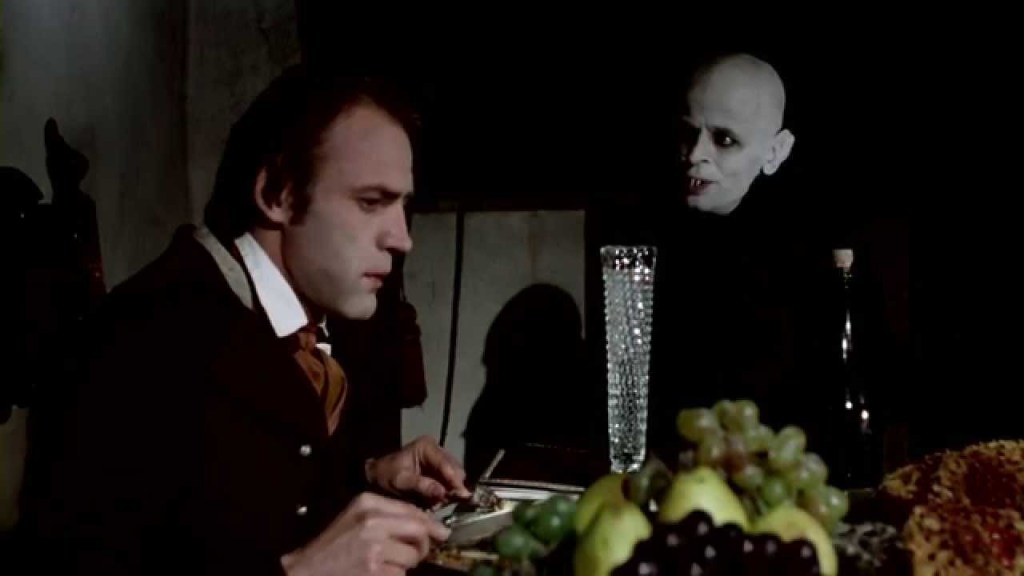
Werner Herzog’s direction is excellent, delivering an effectively eerie atmosphere and unsettling vibe throughout. The grandiose, dark and gothic visuals are fantastic, the cinematography is gorgeous with top notch long and lingering takes, and the lighting and use of shadows are incredible. Herzog very much makes this movie his own, but also successfully recreates some classic Nosferatu shots. The makeup on Dracula is quite similar to Orlok’s look in the original, but still looks really good, especially when considering that this film is in colour and not black and white. The sound design is also great, and Popul Vuh’s score is effectively haunting.
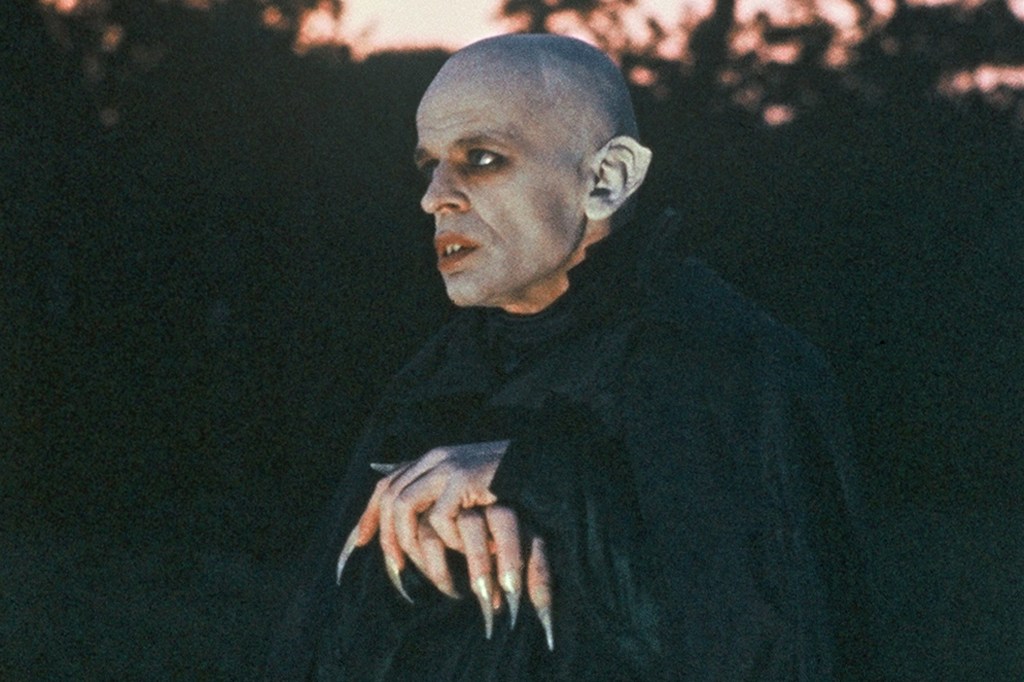
Nosferatu the Vampyre is an atmospheric, methodically paced, visually stunning and excellent horror film. It’s a great remake which pays homage to a classic, while standing on its own.
 The Cinema Critic
Leave a comment