Time: 109 Minutes
Age Rating: R16 – Violence, cruelty, offensive language & content that may disturb
Cast:
Kirsten Dunst as Lee Smith
Wagner Moura as Joel
Cailee Spaeny as Jessie Cullen
Stephen McKinley Henderson as Sammy
Nick Offerman as the President of the United States
Sonoya Mizuno as Anya
Director: Alex Garland
![full_star[1]](https://the-cinema-critic.com/wp-content/uploads/2014/09/full_star1.png?w=300)

I was aware of Ex Machina and Annihilation writer/director Alex Garland’s next movie, Civil War. Admittedly, I was a little skeptical about the movie, less so for the fact that Garland’s last movie was Men (a bit of a mixed bag), and more so the fact that the premise focussed on an outlandish scenario in which America is in a second civil war with Texas and California team up against the government. Still, I was curious enough to check out the movie and I liked it more than I thought I would.
One thing I knew about Civil War going in was that some viewers were divided about its seemingly apolitical stance. The idea of a fictional war movie being apolitical really didn’t sound promising. Having seen the movie for myself though, it turns out that I didn’t have too many issues on the political side of things. First and foremost, I don’t think I would call Civil War an apolitical movie, it just handles its commentary a bit differently. It doesn’t provide easy answers or sign posts telling you who to root for, and there’s no established ideology to be seen here. It limits the context about the conflict, partly so that it can’t be linked to anything from the present day. The end result is a sensory experience where you are thrown into a conflict that you know very little about, and I think that worked for me. The movie does give some details about the conflict, it is established that the President is a fascist approaching his third term, and that he has ordered for journalists to be shot on sight. This paired with particular scenes like when the lead characters stop at an apolitical town, and another scene involving Jesse Plemons, show that politics still very much plays a part in the movie. So I can’t subscribe to the theory that Alex Garland is trying to take some “both sides are bad approach”, mainly because it’s clear that the conflict isn’t what he’s mainly focused on.

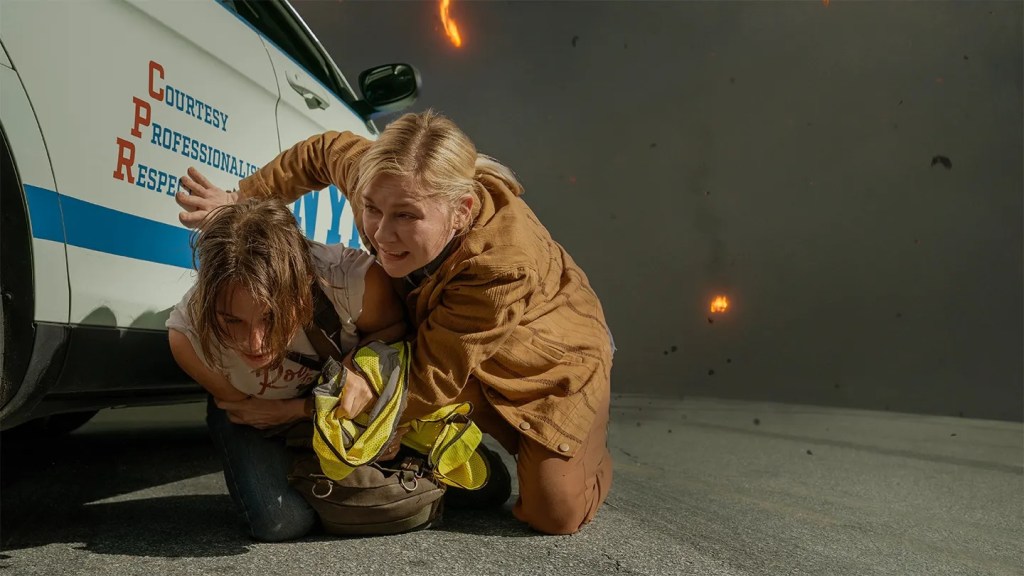
Make no mistake, this movie may be titled Civil War, but it is far more interested in the lives and experiences of its main 4 journalist characters, with the conflict merely being a backdrop for them. So yes, this is more a movie about journalism than war. The main storyline is about these 4 journalists/photographers on a journey to meet the President and photograph and interview him before the insurgent forces arrive at Washington D.C. to kill him. It is a Heart of Darkness esque road trip through a war torn and divided America; these journalists are in almost every scene of the movie, and we observe each atrocity and horrific sight right alongside them. Despite this, we don’t get to learn what they believe in, at the very least they don’t express their thoughts. Instead they just take a picture or two before moving on. Civil War shows how desensitizing this job can be, shown mainly through the characters played by Kirsten Dunst and Cailee Spaeny. The photographers attempt to stay neutral, one stating that in this profession they don’t ask questions, but instead take the photos and leave others to do the asking. As the movie progresses however, it calls into question that viewpoint. While objectivity may be part of being a journalist, we really get to see how flawed this practice is. For all the accusations of Civil War being a centrist or apolitical movie, I’d actually argue that it is instead a condemnation of holding this position. There’s not much of a plot to be seen as it just follows these people on their journey, but I was invested from beginning to end. There is a feeling of uneasiness throughout most of the runtime, and some truly tense sequences at times.

The idea of Texas and California teaming up against a fascist President does seem far fetched, and feels like a premise that would lend itself to a more over the top and satirical film, rather than the serious and grounded Civil War. However, I do understand why Alex Garland decided to construct the central conflict in this way. Minimizing the context and being vague with the worldbuilding does work in many ways, for the reasons stated earlier, and also to avoid having to explain the whys in great detail. That being said, I feel like more context was needed to buy into the conflict, not to fully explain everything, but at least enough to take this conflict seriously. It really doesn’t help when Garland drops in throwaway terms like ‘Portland Maoists’ and the ‘antifa massacre’ with no context or explanation and just expecting us to roll with it and not think about them at all. Generally though, the premise didn’t bother me that much, it just takes me out of the experience at times any time I think too much about it. I will say that by the end of the movie, I felt like something was missing. Even though the ending itself was fitting, especially with its bleak final image, it was perhaps a bit too abrupt.

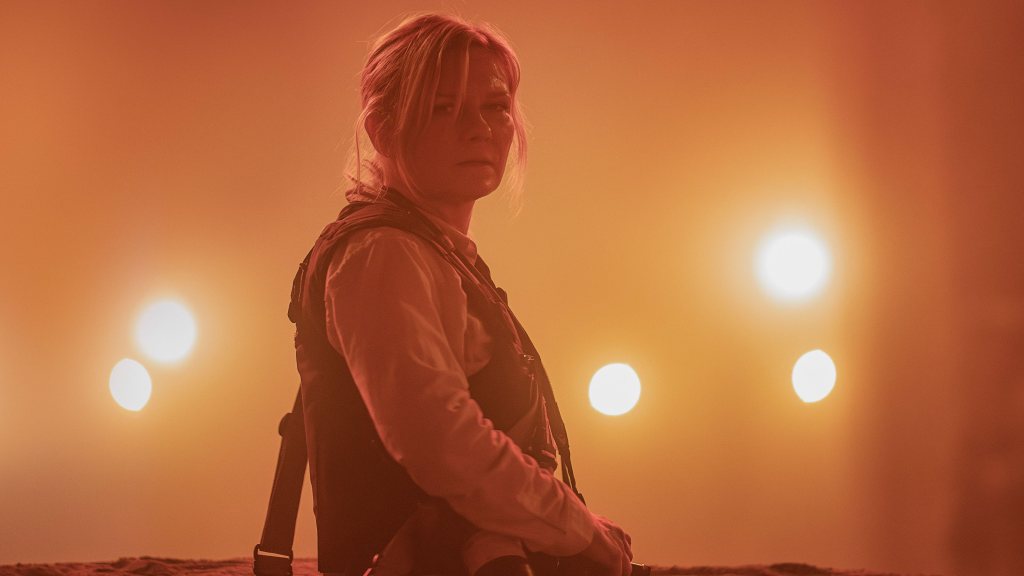
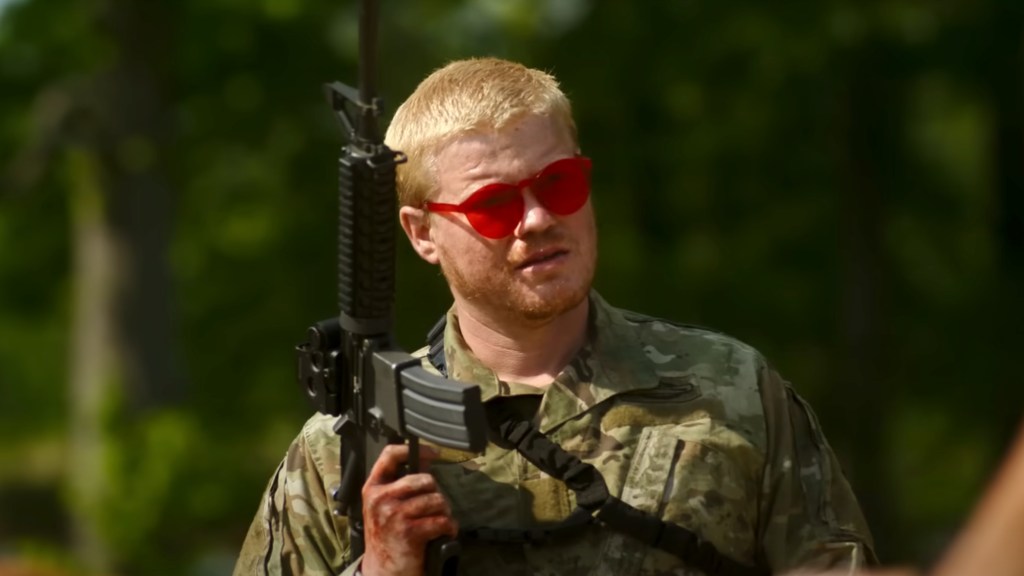
The cast were great, especially the main four leads in Kirsten Dunst, Wagner Moura, Cailee Spaeny and Stephen McKinley Henderson, providing engaging characters to follow. Dunst is fantastic as an experienced war photographer, numb to all the horrors she sees as someone who has covered war crimes many times before. Spaeny is also excellent as an aspiring photographer who goes on the same process of desensitization as Dunst’s character over the course of the movie, and the dynamic between these two is particularly compelling. Nick Offerman plays the President of the United States and is used very sparingly in the movie. While I feel like we could’ve used more of him, I understand why they kept his presence limited. One of the standouts was Jesse Plemons in one scene, providing one of the most memorable, tense and unnerving moments in an already tense and unnerving film.
Alex Garland’s direction is strong as usual, and if he’s really retiring from directing as he said he might, it’s a shame because he does some great work on a technical front. The cinematography from Rob Hardy is great, everything looks so clear and there’s some truly stunning moments. The editing is fantastic, especially with the use of freeze frames used when photos are taken by the characters. While I wouldn’t quite call this an action movie, the action scenes are very well done, feeling incredibly realistic and above all else, scary. The sound design is top notch, gunfire and explosions are startling and loud, and the use of silences is effective too. Civil War really does make you feel like you found yourself in the middle of a chaotic war zone and helps to convey this sensory overload feeling, particularly in the third act where it goes all out with these scenes.

Despite a couple flaws, Civil War is an engaging, intense and unsettling dystopian thriller, with excellent performances, and fantastic direction. Not everyone will see the movie the same way, it’s already showing itself to be a divisive movie. Some people will find it to be great, some will take issues with its politics or lack thereof, and some very odd individuals will see it as a dangerous film which has the potential to actually start a second civil war. Regardless, I do think that it is worth watching for yourselves.

 The Cinema Critic
Leave a reply to Jason Cancel reply