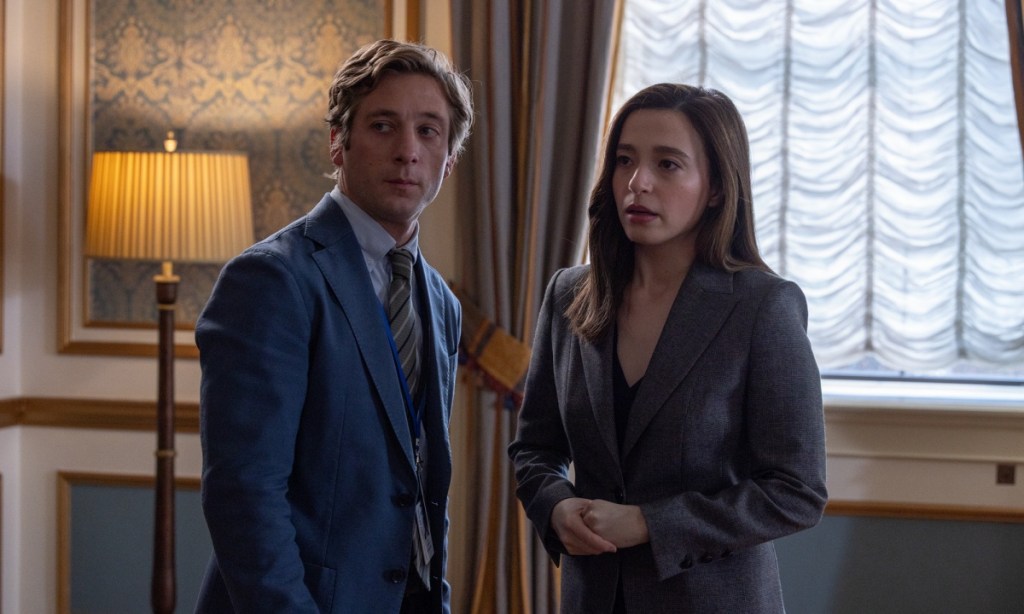
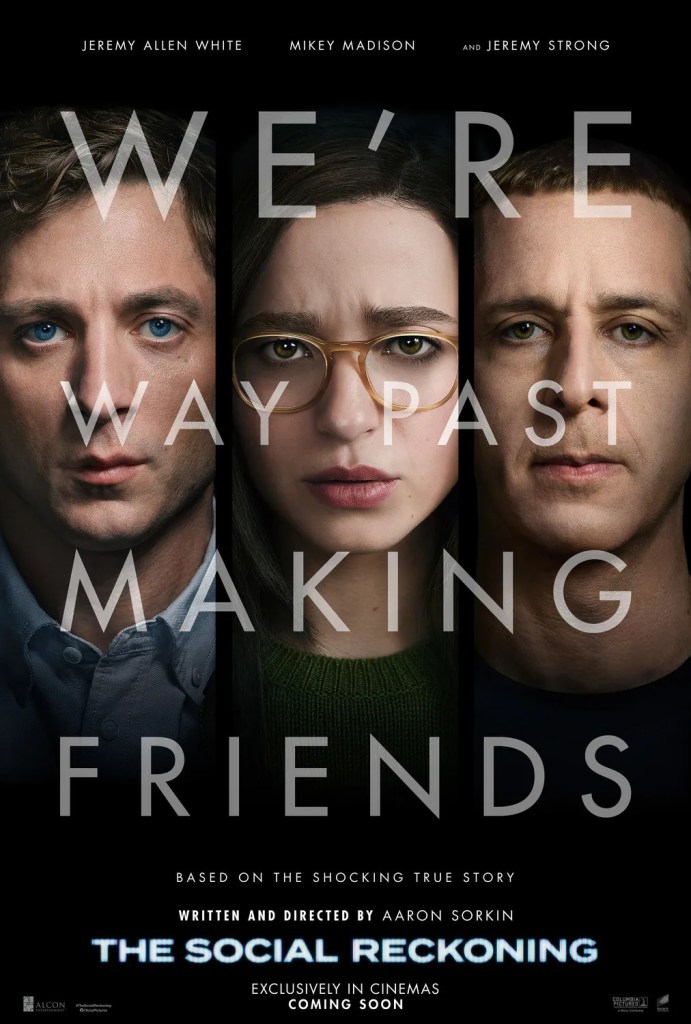
Time: 112 Minutes
Age Rating: M – Violence & offensive language
Cast:
Mikey Madison as Frances Haugen
Jeremy Allen White as Jeff Horwitz
Jeremy Strong as Mark Zuckerberg
Bill Burr as Charlie Garrigan
Wunmi Mosaku as Raya
Billy Magnussen as Teddy Marks
Betty Gilpin as Kris
Director: Aaron Sorkin
![full_star[1]](https://the-cinema-critic.com/wp-content/uploads/2014/09/full_star1.png?w=300)

Aaron Sorkin has been wanting to make a sequel to The Social Network for years and now he’s finally doing it with The Social Reckoning. Despite having a good cast with the likes of Mikey Madison, Jeremy Allen White and Jeremy Strong, I was largely sceptical about it. While Sorkin has written some great movies, I’ve found his recent directorial attempts to be rather mixed, and they often lean into his worst tendencies as a writer. Even with my managed expectations, The Social Reckoning turned out to be worse than I thought it would be.
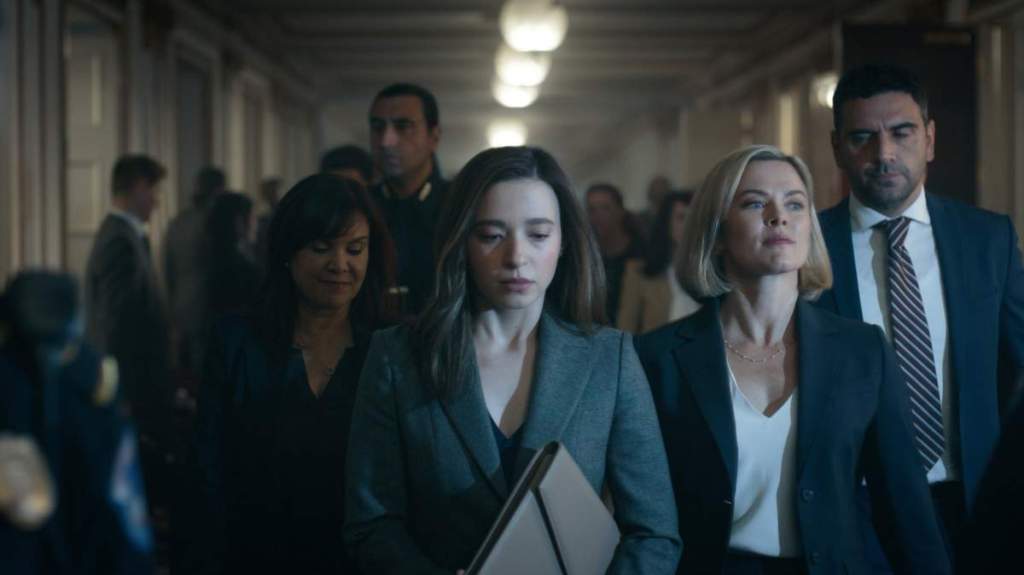
The immediate question that some may have is about The Social Reckoning being a sequel to such an acclaimed classic like The Social Network. Honestly, the only things that these two films have in common are that they are both written by Aaron Sorkin, they both involve Mark Zuckerberg/Facebook, and they are both shot by Jeff Cronenworth. Reckoning wisely doesn’t try to closely connect itself with the 2010 film, and instead aims to be its own standalone movie. So no, you won’t be missing out on anything watching The Social Reckoning if you hadn’t seen The Social Network beforehand, except that the latter is a far better film in every single way. The general consensus with Aaron Sorkin is that for as good as a writer he is, he is flawed as a director. It’s not just that the technical elements and presentation are fairly average, but the strengths of his writing are often conveyed better by different directors, like David Fincher for The Social Network and Danny Boyle for Steve Jobs. That being said, I don’t think his script for The Social Reckoning was good at all, and many of Sorkin’s worst tendencies are fully on display here. The dialogue is trying very hard to be witty, it feels smarter than it actually is, and it largely consists of one liners, comebacks and long winded monologues. Of course characters don’t need to talk ‘realistically’, but none of the dialogue here is compelling or entertaining, and it’s never funny despite the numerous attempts at humour. Barely any of these characters actually feel like people; they often feel more like mouthpieces for spouting off ideas, and the attempts at giving the characters personalities come down to giving them quirks instead of actual traits (Mikey Madison really gets the worst of it here).
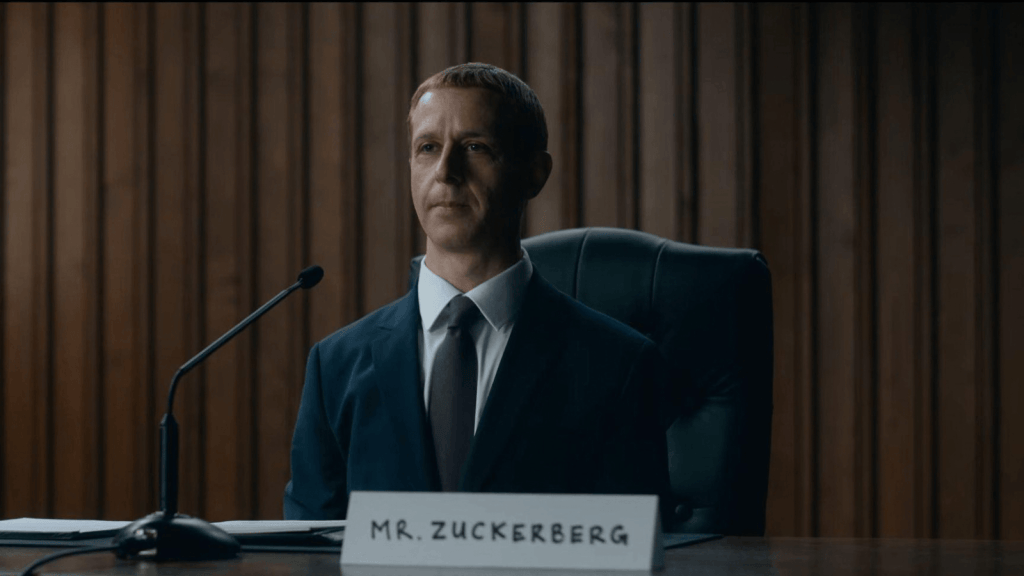
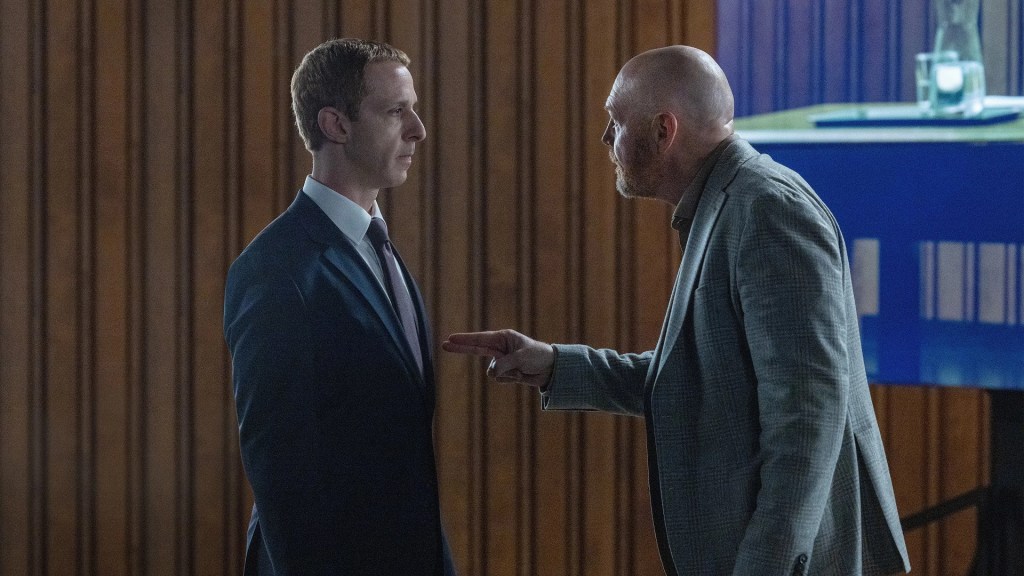
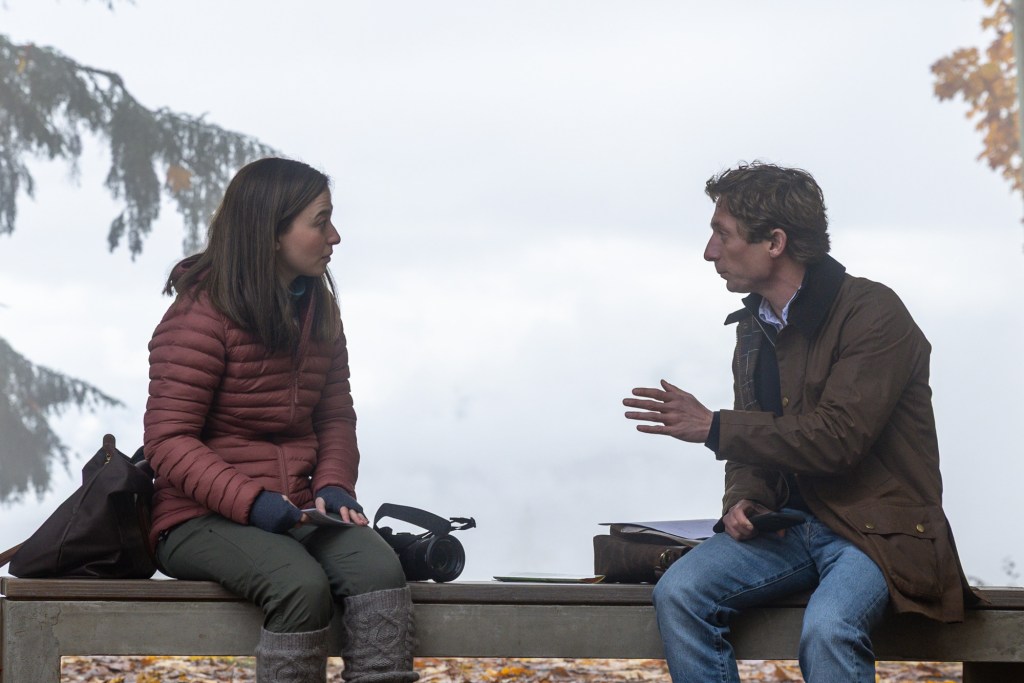
I’ve complained about the annoying dialogue and the empty characters, but the story isn’t interesting or well told either. There are two main plotlines, the main story takes place over a number of years in which Mikey Madison’s Facebook data engineer gradually gives information to Jeremy Allen White’s reporter to blow the whistle on the company. The secondary plotline focuses on Mark Zuckerberg rehearsing to testify before the United States Senate in early 2021. As it happens, the latter ended up being more interesting to me, and while I did enjoy the back and forth between characters much more there (especially between Jeremy Strong’s Zuckerberg and Bill Burr), it’s largely because the former just wasn’t very compelling to me. As I said before, the characters weren’t engaging or believable, but they were also pretty bad at conveying information. Plenty of movies have been able to deliver dry information in engaging ways and remain captivating throughout, The Social Reckoning is not one of them. It’s method is having Mikey Madison constantly breaking information down to Jeremy Allen White through bland exposition and stating statistics and percentages. It is so dry that none of it really sticks or strikes the impact that Aaron Sorkin wants it to have.
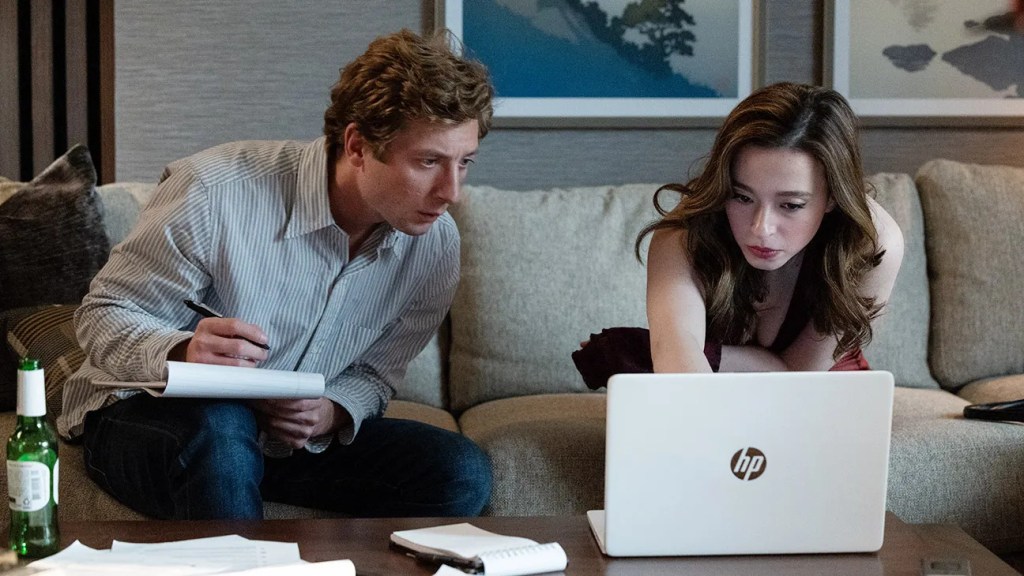
Then there’s the message and point of the movie, and as well intentioned as the movie is, it feels incredibly limited and lacking in complexity. Aaron Sorkin clearly found this story to be important and urgently needing to be told. The Social Reckoning seems to recognise that a problem exists, but yet it doesn’t want to interrogate it in any meaningful way, nor in tackling social media’s influence and effect on society and people on a larger scale. Sorkin is only willing to go as far as “Facebook did bad stuff, Mark Zuckerberg did bad stuff” and that’s it, to the point where they probably should’ve titled the movie to The Facebook Reckoning instead. The movie wasn’t going to be timeless, with the limited way that Aaron Sorkin was approaching this story it could only be timely at best. And yet, it also feels far too late. The ending remains the most baffling part of the movie for me as it ends on a triumphant fist pumping note (paired with triumphant music). Perhaps it might’ve worked had it released in 2023 or 2024, with the naive hope and optimism that things are about to change. However, it was filmed in 2025 and in the time since the events portrayed in the movie, so much had been made blatantly clear: nothing had changed, Facebook got away with everything, and everything is worse now. Ironically, this movie really doesn’t want to reckon with any of that and pats itself on the back anyway. As a result, the conclusion of the film feels incredibly tone deaf.
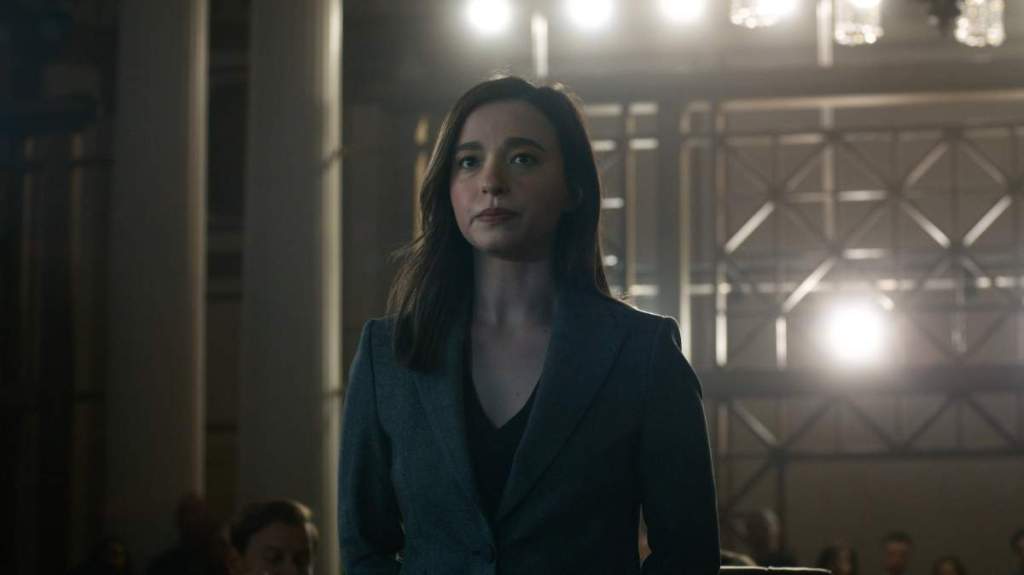
A good cast is assembled here, and it’s a shame that they don’t have the best material to work with. Still, they generally deliver some fine work and are easily the best part about the movie. Mikey Madison and Jeremy Allen White are very talented actors, yet as the leads, they have the worst writing. Madison plays Frances Haugen, the Facebook data engineer who becomes a whistleblower and despite being the most important character, The Social Reckoning doesn’t characterise her well. She’s left feeling quite empty beyond having a few quirks, and having some pretty bad dialogue to deliver. Her choices and changes don’t appear to be driven by anything in particular, she begins with not wanting to leak confidential Facebook documents and really believing in the company, and an hour later in the movie completely changing her tune. In that time, I’m not exactly sure what spurred her choices. That said, Mikey Madison acts well with what she has. Jeremy Allen White plays reporter Jeff Horwitz, he felt better characterized compared to Frances in the sense that he felt more like a normal human being. Even so, JAW is working through some bad material and atrocious dialogue. The most embarrassing moment of the movie (which is saying a lot) was when he gives his out of place thoughts (or rather Aaron Sorkin’s thoughts) about mansplaining, and I don’t think there was any way of delivering that line with any credibility. Still, he also gives a decent performance. Jeremy Strong replaces Jesse Eisenberg as Mark Zuckerberg after the latter opted not to return to reprise his role from The Social Network. I’d be curious if Sorkin retooled the script after that decision because if he didn’t, Eisenberg wasn’t missing out on much. Strong’s Zuckerberg was very much the outer public view of the figure and despite being a central figure to the story, he takes something of a back seat here. Strong’s imitation of the Facebook CEO is fittingly stiff, if a bit too robotic to the degree that it was approaching parody levels. But I think the performance is good on the whole, and at least the awkwardly written dialogue somewhat fitted the role. The rest of the cast do decent work with what they have, some of them actually fare better than the aforementioned leads and actually come across as natural and human. Wunmi Mosaku and Billy Magnussen are solid in their minor roles, and Bill Burr was probably the best of the bunch.
Aaron Sorkin’s directed movies have really shown that his scripts really work better when they are helmed by other directors, like David Fincher or Danny Boyle. I wouldn’t say that his direction is outright bad, but it is just too by the numbers that it lets the writing and whole movie down. The camerawork, editing, everything is so standard and competent, but never exciting. Cinematographer Jeff Cronenworth also shot The Social Network, and yet there’s never a moment in which The Social Reckoning looks better than just fine. When the movie actually attempts to be somewhat stylistic with the zooms and colour filters, it just felt so basic and amateur. Also, the constant visuals on screen explaining the timeline and when things are taking place were obnoxious. The score from Alexandre Desplat is fine, it doesn’t try to ape The Social Network, but it doesn’t add much of anything either.
Despite its good intentions and performances, The Social Reckoning is a middling, dry, limited, and tedious to watch journalistic legal thriller with uninspired direction that is years late, despite its urgency.


Leave a Reply